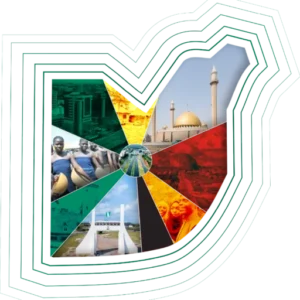
Notable Landmark
Notable Landmarks
Icons of Nigeria’s Capital
Abuja’s skyline and landscape are defined by landmarks that tell the story of Nigeria’s ambition, diversity, and cultural heritage. From ancient rock formations that stood long before the city existed to modern architectural marvels built to represent a nation, these landmarks are more than tourist attractions. They are symbols of identity, power, faith, and progress.
Whether you’re exploring for the first time or rediscovering familiar sites, Abuja’s landmarks offer windows into the capital’s soul.
Aso Rock: The Presidential Monolith
No landmark defines Abuja more than Aso Rock. This massive 400-meter (1,312 feet) monolith dominates the city’s skyline, visible from nearly every corner of the capital. Formed over millions of years by water erosion, Aso Rock is both a natural wonder and a symbol of political power.
The Presidential Complex
At the base of Aso Rock sits the Aso Rock Presidential Villa, often simply called “The Rock.” This is the official residence and workplace of Nigeria’s President, housing:
The Presidential Residence: Private quarters for the President and First Family, set against the dramatic backdrop of the rock formation.
Office Complex: Where executive decisions shaping Nigeria’s future are made daily. The President’s office, meeting rooms, and administrative offices operate here.
State House: Venue for official state functions, hosting visiting heads of state, diplomatic receptions, and national ceremonies.
Security Infrastructure: Heavily guarded and restricted, the Presidential Villa represents the nerve center of Nigerian governance.
The Villa’s architecture blends modern design with traditional Nigerian elements, creating a structure befitting a continental power. Its position at the foot of Aso Rock creates an imposing visual statement: permanence, strength, and natural authority.
Symbolism and Significance
Aso Rock transcends physical presence. For Nigerians, “The Rock” has become shorthand for the presidency itself. News reports reference decisions made “at The Rock.” Political analysts discuss what’s happening “inside The Rock.” The monolith and the government it houses have become inseparable in the national consciousness.
Unlike artificial monuments that can be torn down or rebuilt, Aso Rock was here before Nigeria existed and will remain long after. This permanence makes it a fitting symbol for a nation seeking stability and continuity.
Zuma Rock: The Gateway to Abuja
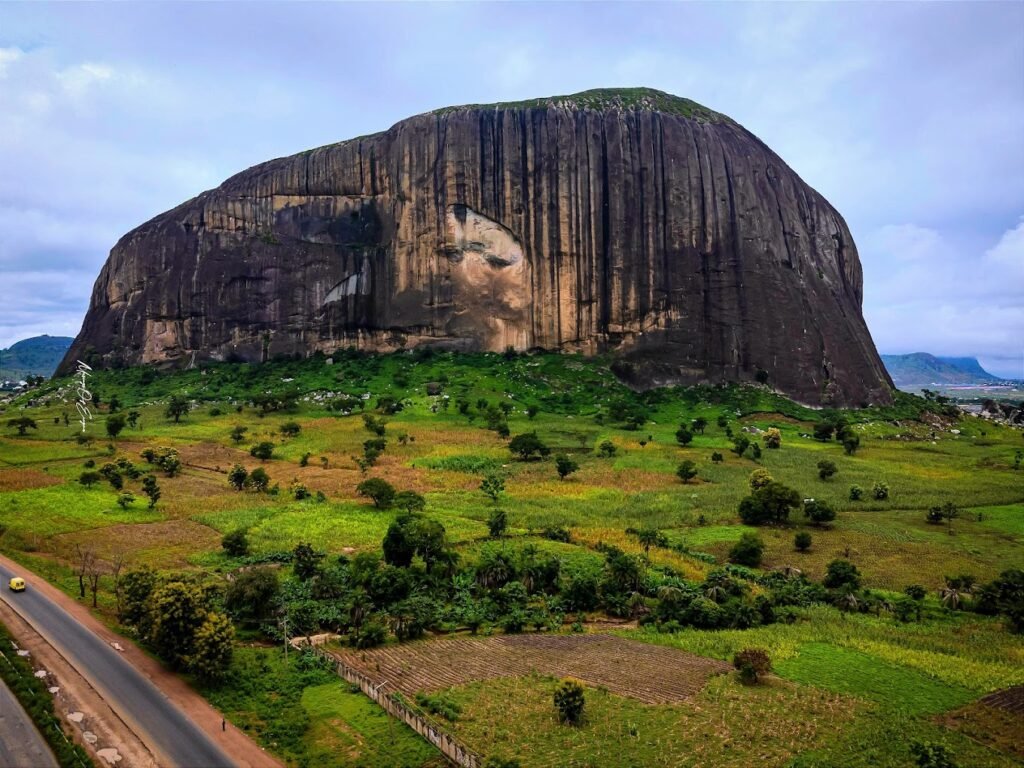
Located just north of Abuja on the Abuja-Kaduna Expressway, Zuma Rock stands as an even larger natural monument at 725 meters (2,379 feet) tall. Often called the “Gateway to Abuja,” Zuma Rock greets travelers approaching the capital from the north.
The Human Face
Zuma Rock’s most famous feature is the natural rock formation on its face that resembles a human profile. From certain angles, the ridges and shadows create the distinct appearance of a face gazing across the landscape. This has inspired countless legends and myths among local communities.
Local Legends: Indigenous communities have stories about Zuma Rock dating back centuries. Some speak of it as a protective guardian watching over the land. Others tell tales of supernatural significance and ancient spirits residing within the rock.
National Symbol: Zuma Rock appears on Nigeria’s 100 Naira note, making it one of the country’s most recognized landmarks. Its image represents strength, natural beauty, and the Nigerian identity.
Visiting Zuma Rock
Unlike Aso Rock which is restricted, Zuma Rock is accessible to visitors. Located in Niger State but closely associated with Abuja, the rock has become a popular spot for:
- Photography, especially during sunrise and sunset when lighting creates dramatic effects
- Picnics and outdoor gatherings at the base
- Cultural festivals and events celebrating indigenous heritage
- Tourist excursions and school trips
The Nigerian Tourism Development Corporation has worked to develop facilities around Zuma Rock, though it remains largely a natural site rather than a heavily commercialized attraction.
The National Mosque: Golden Dome of Faith
The Abuja National Mosque, also known as the Nigerian National Mosque, stands as one of the most magnificent Islamic structures in Africa. Its golden dome is visible across central Abuja, a gleaming symbol of Nigeria’s Islamic heritage.
Architecture and Design
The Golden Dome: The mosque’s most striking feature is its massive golden dome, which catches sunlight and creates a beacon visible from kilometers away. The dome represents divine light and Islamic architectural tradition.
Minarets: Four towering minarets stand at the corners of the mosque complex, reaching skyward and calling the faithful to prayer five times daily.
Capacity: The mosque can accommodate over 15,000 worshippers simultaneously, making it one of Nigeria’s largest Islamic worship spaces.
Design Elements: The architecture blends traditional Islamic design with modern construction techniques. Intricate geometric patterns, calligraphy, and decorative elements honor centuries of Islamic architectural heritage.
National Significance
The National Mosque serves multiple purposes beyond regular worship:
State Functions: Official Islamic ceremonies, including Eid prayers attended by the President and other government officials, take place here.
Interfaith Symbol: Located near the National Christian Centre, the mosque represents Nigeria’s commitment to religious tolerance and peaceful coexistence.
Educational Role: The mosque complex includes facilities for Islamic education, lectures, and community programs.
Architectural Achievement: The mosque showcases Nigeria’s ability to create world-class religious architecture that honors tradition while embracing modernity.
National Christian Centre: Architectural Faith
Standing in symbolic proximity to the National Mosque, the National Christian Centre represents Nigeria’s Christian population and the nation’s commitment to religious pluralism.
Design and Structure
The National Christian Centre features distinctive modern architecture designed to make a bold statement:
The Chapel: The main worship hall features soaring ceilings and modern design elements. Natural light floods the space through carefully designed windows, creating an atmosphere of reverence and contemplation.
Capacity: Like the National Mosque, the centre can accommodate thousands of worshippers for major services and national events.
Ecumenical Purpose: The centre serves Christians across denominations, hosting Catholic, Protestant, Pentecostal, and other Christian communities for various services and events.
National Events: State funerals, national prayer services, and official Christian ceremonies occur here, attended by government officials and dignitaries.
Symbol of Unity
The proximity of the National Christian Centre to the National Mosque is deliberate and symbolic. In a nation where religious tensions occasionally surface, these two structures standing near each other represent an ideal: different faiths coexisting peacefully under one national identity.
On Fridays, Muslims stream to the mosque for Jummah prayers. On Sundays, Christians fill the centre for worship. This weekly rhythm demonstrates religious diversity functioning in practice, not just theory.
Millennium Park: Green Heart of the Capital
In a city dominated by government buildings and modern architecture, Millennium Park offers a different kind of landmark: nature preserved and cultivated in the heart of the capital.
Nigeria’s Largest Public Park
Opened in 2003, Millennium Park is the largest public park in Abuja and one of the largest in Nigeria, covering approximately 32 hectares.
Gardens and Greenery: Carefully landscaped gardens showcase both indigenous Nigerian plants and imported species, creating a botanical diversity.
Walking Trails: Paved pathways wind through the park, popular with joggers, walkers, and families enjoying outdoor time.
Unity Fountain: The park’s centerpiece is a large fountain representing Nigeria’s unity, popular for photos and gatherings.
Community Space
Unlike monuments you observe from a distance, Millennium Park is designed for interaction:
- Families picnic on weekends, spreading blankets under trees
- Fitness enthusiasts use the trails for morning and evening exercise
- Events and festivals utilize the open spaces
- Couples find quiet corners for romantic moments
- Children play in designated areas while parents relax
In a fast-paced capital city, Millennium Park offers breathing room, a place where Abuja’s residents reconnect with nature and each other.
The Three Arms Zone: Power in Architecture
The Three Arms Zone is not a single building but a carefully planned area housing Nigeria’s three branches of government. This zone represents the separation of powers fundamental to democratic governance.
The Three Arms
Executive: The Presidential Villa (Aso Rock Villa) represents executive power where the President and cabinet make and implement policy.
Legislative: The National Assembly Complex houses both the Senate and House of Representatives, where Nigeria’s laws are debated and passed.
Judicial: The Supreme Court of Nigeria, the highest court in the land, interprets the constitution and serves as final arbiter of legal disputes.
Symbolic Layout
The physical separation of these buildings within a defined zone creates a geographic representation of democratic principles. Each arm operates independently yet within sight of the others, just as the constitution intended.
The architecture of each building reflects its function. The National Assembly’s design suggests openness and debate. The Supreme Court’s structure conveys authority and finality. The Presidential Villa combines accessibility with security.
Abuja City Gate: The Grand Welcome
The Abuja City Gate is a massive archway that marks the entrance to the Federal Capital Territory for travelers arriving from the airport. This imposing structure serves as both a landmark and a symbolic threshold.
Design: The gate features bold, modern architecture with clean lines and impressive scale. Its design suggests both welcome and significance, telling visitors they’re entering Nigeria’s capital.
Location: Strategically positioned on the airport road, the gate is often the first major landmark visitors see when arriving in Abuja, creating a strong first impression.
The City Gate has become an unofficial symbol of Abuja, appearing in photographs, promotional materials, and even as a meeting point reference (“Meet me at the City Gate”).
Jabi Lake: Natural Beauty Preserved
While Jabi Lake is a natural feature rather than a constructed monument, it has become one of Abuja’s most beloved landmarks. The lake and surrounding area offer recreation, natural beauty, and waterfront development.
The Lake and Mall
Jabi Lake Mall, Nigeria’s first shopping mall built on water, has made the lake a commercial and recreational hub. The mall’s unique floating design creates a distinctive landmark while preserving the lake itself.
Activities around Jabi Lake include:
- Boat rides and water activities
- Waterfront dining and entertainment
- Shopping in the mall’s numerous stores
- Evening walks along the waterfront
- Photography, especially at sunset
Living Monuments
Abuja’s landmarks do more than mark space or impress visitors. They function as gathering points, symbols of identity, and physical manifestations of Nigeria’s values and aspirations.
Aso Rock and Zuma Rock remind us that some things existed before nations and will exist after. The National Mosque and Christian Centre prove that diversity can coexist. Millennium Park demonstrates that development need not destroy nature. The Three Arms Zone shows democracy made physical.
These landmarks don’t just define Abuja’s skyline. They define what Abuja represents: a capital built with purpose, a city where Nigeria’s past, present, and future converge.
