
The District of Abuja
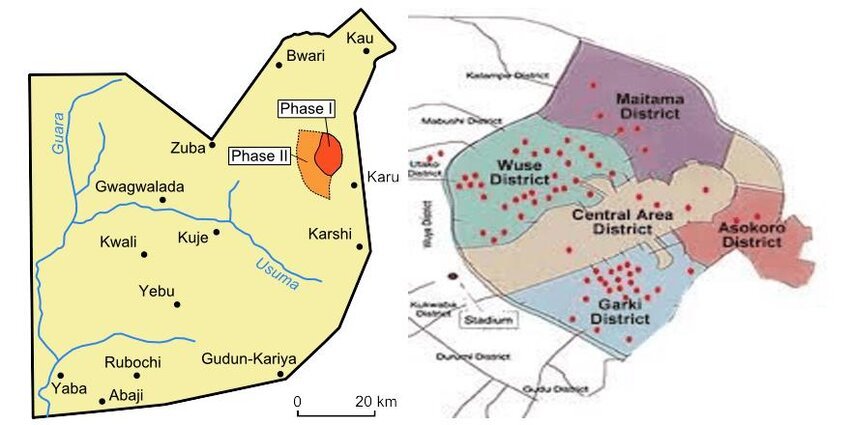
The Districts of Abuja
A City Organised by Purpose
One of Abuja’s most defining features is its district-based structure. Unlike many cities that expand organically, Abuja was deliberately divided into districts, each designed to serve specific residential, commercial, administrative, or diplomatic functions.
This system allows the city to function efficiently, manage growth, and maintain balance between work, living, and recreation. Understanding Abuja means understanding its districts.
The Central Area
The Central Area forms the civic and administrative heart of Abuja. It is home to key national institutions and serves as the symbolic core of the capital.
Key Features: National Assembly, Supreme Court, Federal Secretariat, Eagle Square.
Function: Governance, national ceremonies, public administration.
Character: Highly planned, formal, and secured.
Accessibility: Connected to all major districts by arterial roads.
Maitama
Maitama is Abuja’s most prestigious residential district, known for its low-density layout, embassies, and luxury homes.
Residents: Diplomats, ministers, senior civil servants, business elites.
Landmarks: Foreign embassies, upscale restaurants, boutique hotels.
Lifestyle: Quiet, exclusive, and highly secured.
Reputation: Symbol of political and economic power.
Asokoro
Asokoro combines political significance with residential exclusivity. It is located close to Aso Rock and hosts many government officials.
Key Institutions: Presidential residences, government lodges.
Housing: Large plots and official residences.
Atmosphere: Calm, green, and highly restricted in parts.
Importance: Directly tied to executive power.
Wuse
Wuse is one of Abuja’s most dynamic and diverse districts, serving as a major commercial and residential hub.
Wuse Zone 1–6: Mixed-use zones with offices, markets, and housing.
Wuse 2: Abuja’s nightlife and business hotspot.
Landmarks: Wuse Market, banks, restaurants, malls.
Garki
Garki is one of Abuja’s earliest developed districts and remains a vital administrative and residential area.
Institutions: Federal ministries, hospitals, government offices.
Character: Functional, busy, and accessible.
Gwarinpa
Gwarinpa is the largest single housing estate in Africa and a cornerstone of Abuja’s middle-class population.
Population: Hundreds of thousands of residents.
Housing: Planned estates, apartments, duplexes.
Lifestyle: Family-oriented with schools, parks, and shopping centers.
Role: Backbone of Abuja’s residential life.
Utako and Jabi
Utako and Jabi serve as important transport, residential, and commercial districts.
Utako: Major transport node with bus terminals and hotels.
Jabi: Home to Jabi Lake, malls, offices, and upscale residences.
Kubwa
Kubwa is one of the largest satellite districts, located northwest of the city center.
It serves as a major residential area for civil servants, professionals, and families seeking affordable housing outside the core city.
Satellite Towns
Beyond the central districts, Abuja’s growth has produced several satellite towns that support the city’s workforce.
Nyanya & Karu: High-density commuter settlements.
Lugbe: Rapidly growing residential area along the airport corridor.
Gwagwalada: Educational and commercial hub within the FCT.
A City of Many Centres
Abuja does not rely on a single downtown. Instead, its districts function as interconnected centres, each contributing to the city’s economy, culture, and daily life.
Together, these districts form a capital city designed for balance—between power and people, order and growth, tradition and modernity.

