The Presidency
The Presidency
The Seat of Executive Power
The Presidency stands at the center of Nigeria’s executive authority and is one of the defining institutions that give Abuja its national significance. As the office of the President of the Federal Republic of Nigeria, it represents the highest level of governance, decision-making, and leadership in the country.
When Abuja was conceived as Nigeria’s new capital, the Presidency was intentionally placed at the heart of the city’s design. Its location, structure, and surrounding districts were planned to project stability, neutrality, and national unity—key ideals behind the creation of the Federal Capital Territory.
Aso Rock Villa
The official seat of the Presidency is the Presidential Complex, widely known as Aso Rock Villa. Situated at the base of the imposing Aso Rock, the complex serves as both the official residence and administrative headquarters of the President.
Strategic Location: The Villa’s placement beneath Aso Rock provides natural security, symbolism, and visibility. The rock itself has become synonymous with Nigeria’s executive power.
Design and Layout: The complex includes presidential offices, residential quarters, guest houses, meeting halls, and support facilities for senior government officials.
Security: Aso Rock Villa is one of the most secured locations in the country, guarded by elite security units responsible for protecting the President and key state assets.
Symbolism: Over time, “Aso Rock” has become a metonym for the Presidency, often used to refer to executive decisions and authority.
Functions of the Presidency
The Presidency is responsible for directing national policy, executing laws passed by the legislature, and representing Nigeria both domestically and internationally.
Executive Leadership: The President appoints ministers, heads of agencies, and senior government officials, shaping the direction of national governance.
Commander-in-Chief: The President serves as the supreme commander of Nigeria’s Armed Forces, with responsibility for national security and defense.
Policy Direction: Major economic, social, and foreign policies originate from the executive arm of government.
The Presidency and National Unity
Abuja’s role as a neutral capital is deeply tied to the Presidency. By relocating executive power from Lagos to Abuja, Nigeria aimed to reduce regional dominance and create a political center accessible to all citizens.
The Presidency, operating from Abuja, symbolizes this balance—serving as a reminder that executive power belongs to the entire nation, not any single region or ethnic group.
Diplomacy and International Relations
As Nigeria’s executive authority, the Presidency plays a central role in foreign relations and diplomacy. State visits, international summits, and bilateral agreements are often hosted or initiated from Abuja.
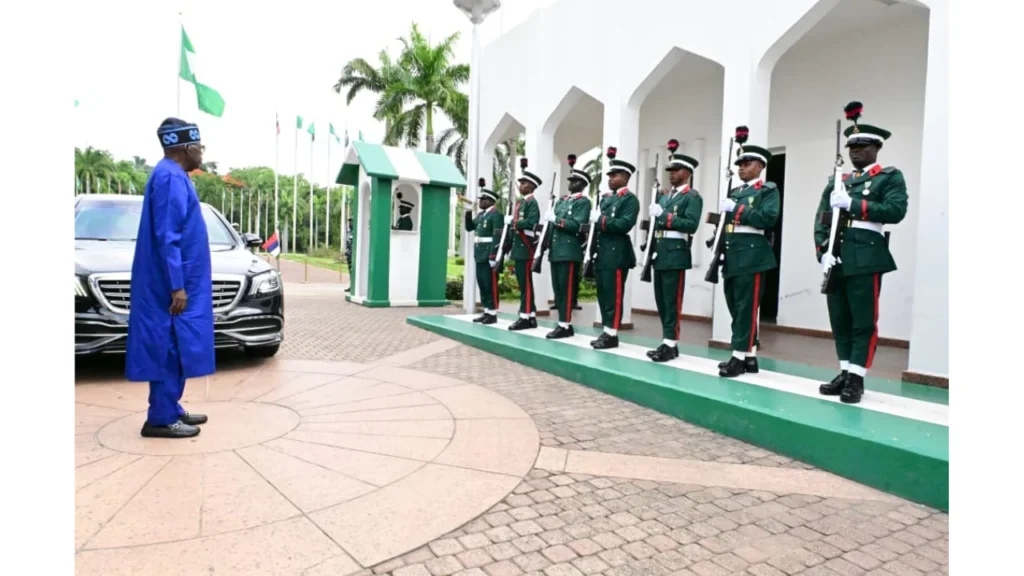
State Functions: Visiting heads of state and foreign dignitaries are received at the Presidential Complex.
Global Representation: Decisions taken at the Presidency influence Nigeria’s position within Africa and on the global stage.
Impact on the City of Abuja
The presence of the Presidency has shaped Abuja’s physical and social landscape. Entire districts—such as Asokoro and Maitama—developed partly to support government operations, diplomatic missions, and senior officials.
Infrastructure development, security planning, and international visibility of Abuja are all closely linked to the Presidency’s presence in the city.
The Presidency in Everyday Abuja
For residents, the Presidency is not just an abstract institution. Road closures, security movements, national broadcasts, and state events regularly remind Abuja’s people that they live at the center of national power.
Yet beyond its authority, the Presidency remains a symbol—of leadership, responsibility, and the ongoing project of governing Africa’s most populous nation.

