
Real Estate & Growth
Real Estate & Growth
The Engine Behind Abuja’s Expansion
More than any other sector, real estate has shaped Abuja’s physical form, economic momentum, and social structure. What began as a carefully planned capital has evolved into one of Africa’s most active property markets, driven by population growth, government presence, and sustained demand for residential and commercial space.
In Abuja, real estate is not just about buildings — it is about power, proximity, policy, and long-term value. Land allocation, zoning decisions, and infrastructure development directly influence who lives where, how the city expands, and how wealth is created.
Planned Origins, Market Reality
Abuja’s master plan envisioned a controlled, phased development where land use, density, and infrastructure would grow in harmony. Residential districts were clearly separated by income class, function, and geography.
Over time, however, market forces accelerated growth beyond original projections. Rising demand, population pressure, and speculative investment reshaped the real estate landscape — sometimes in alignment with the plan, sometimes in conflict with it.
Land as Power and Policy
All land in the Federal Capital Territory is vested in the Federal Government, administered through the FCT Administration. Unlike Nigerian states where land control is decentralized, Abuja’s land system places extraordinary influence in federal hands.
Certificates of Occupancy (C of O), allocations, revocations, and reassignments directly affect property values and development outcomes. This makes land policy one of the most sensitive and influential tools in Abuja’s growth story.
- Government allocation determines who builds and where
- Revocations reshape entire neighborhoods
- Infrastructure promises drive speculative investment
Residential Real Estate: A City of Layers
Abuja’s residential market is highly stratified, reflecting income levels, political influence, and access to infrastructure.
High-End Districts
Districts such as Maitama, Asokoro, Guzape, Katampe Extension, and Jabi represent the top tier of Abuja’s housing market.
Properties in these areas feature large plots, luxury finishes, high security, and proximity to power. Demand is driven by politicians, diplomats, senior civil servants, business elites, and high-net-worth individuals.
- Detached mansions and luxury apartments
- Gated estates and private developments
- High rental yields and strong capital appreciation
Middle-Class Housing
Gwarinpa, Wuye, Utako, Lokogoma, and parts of Kubwa form the backbone of Abuja’s middle-income housing market.
These areas accommodate civil servants, professionals, entrepreneurs, and growing families. Demand remains consistently high due to relative affordability and access to schools, markets, and transport routes.
Satellite Town Expansion
As central districts become increasingly expensive, growth has pushed outward into satellite towns such as Lugbe, Nyanya, Karu, Kuje, Gwagwalada, and Idu.
These areas now absorb much of Abuja’s population growth, offering lower land prices and higher-density housing.
Commercial Real Estate
Commercial property development has expanded alongside residential growth, driven by government, corporate, and service-sector demand.
Office Spaces
Demand for office space remains strongest in Wuse 2, Central Area, Garki, and emerging business corridors. Tenants include banks, consultancies, NGOs, tech firms, and government contractors.
Retail and Mixed-Use Developments
Shopping malls, plazas, and mixed-use developments have reshaped consumer culture in Abuja.
- Jabi Lake Mall
- Ceddi Plaza
- Grand Square and district plazas
These developments combine retail, offices, leisure, and sometimes residential units, maximizing land value and foot traffic.
Construction Boom and Urban Form
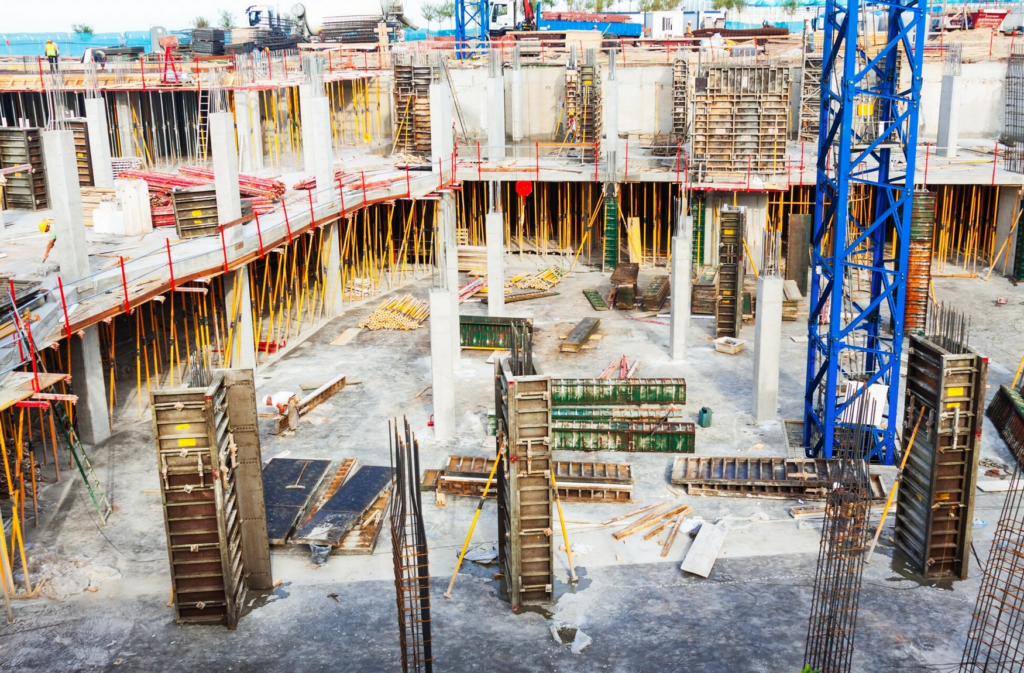
Real estate growth has triggered continuous construction activity across Abuja. Cranes, scaffolding, and unfinished structures define many districts.
This boom supports a vast ecosystem: architects, engineers, surveyors, builders, artisans, material suppliers, and informal labor.
However, it has also introduced challenges — skyline inconsistency, encroachment on green zones, and infrastructure strain.
Infrastructure as a Value Multiplier
In Abuja, infrastructure determines real estate value more than aesthetics.
Road construction, rail expansion, power supply, and water access instantly reshape land prices. Announcements of new highways or rail lines often trigger speculative buying long before completion.
Airport Corridor: Rapid appreciation driven by accessibility and prestige.
Rail-Connected Zones: Increased investor interest.
Underserved Areas: Lower prices but higher long-term growth potential.
Infrastructure Lag: A major risk for buyers.
Speculation, Risk, and Regulation
Abuja’s real estate market is highly speculative. Many buyers acquire land or properties not for immediate use, but for future appreciation.
This has driven rapid price inflation, sometimes disconnected from actual infrastructure delivery.
Regulatory enforcement remains uneven, leading to:
- Unauthorized developments
- Land disputes and title conflicts
- Demolitions and revocations
Social Impact of Growth
Real estate growth has reshaped Abuja’s social geography.
High costs push lower-income workers farther from the city center, increasing commute times and transport pressure. Meanwhile, elite districts grow increasingly insulated.
This spatial inequality raises critical questions about inclusion, affordability, and the future livability of the capital.
The Future of Abuja’s Real Estate Market
Looking ahead, Abuja’s real estate trajectory will depend on choices made today.
- Will planning laws be enforced consistently?
- Will affordable housing receive serious investment?
- Can infrastructure keep pace with expansion?
- Will green spaces be protected?
If managed well, Abuja can remain one of Africa’s most stable and attractive property markets — not just for wealth, but for quality urban life.
Growth with Consequence
Real estate built Abuja — and will continue to define its future.
But growth without discipline risks eroding the very advantages that made the city desirable: order, space, balance, and foresight.
The challenge is not whether Abuja will grow. It will.
The challenge is whether it will grow wisely.

