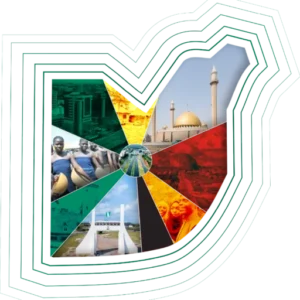
History of Abuja
From Village to Capital: The Abuja Story
The story of Abuja is one of vision, ambition, and transformation. In just over four decades, this collection of small villages inhabited by indigenous communities became the beating heart of Africa’s most populous nation. Understanding Abuja’s history is understanding Nigeria’s quest for unity, progress, and a capital that truly belongs to all its people.
Before Abuja: The Lagos Problem (1960s-1970s)
When Nigeria gained independence in 1960, Lagos served as the nation’s capital. Located on the southwestern coast, Lagos had been the colonial administrative center and naturally continued as the seat of government for the new nation.
However, by the 1970s, serious problems had emerged:
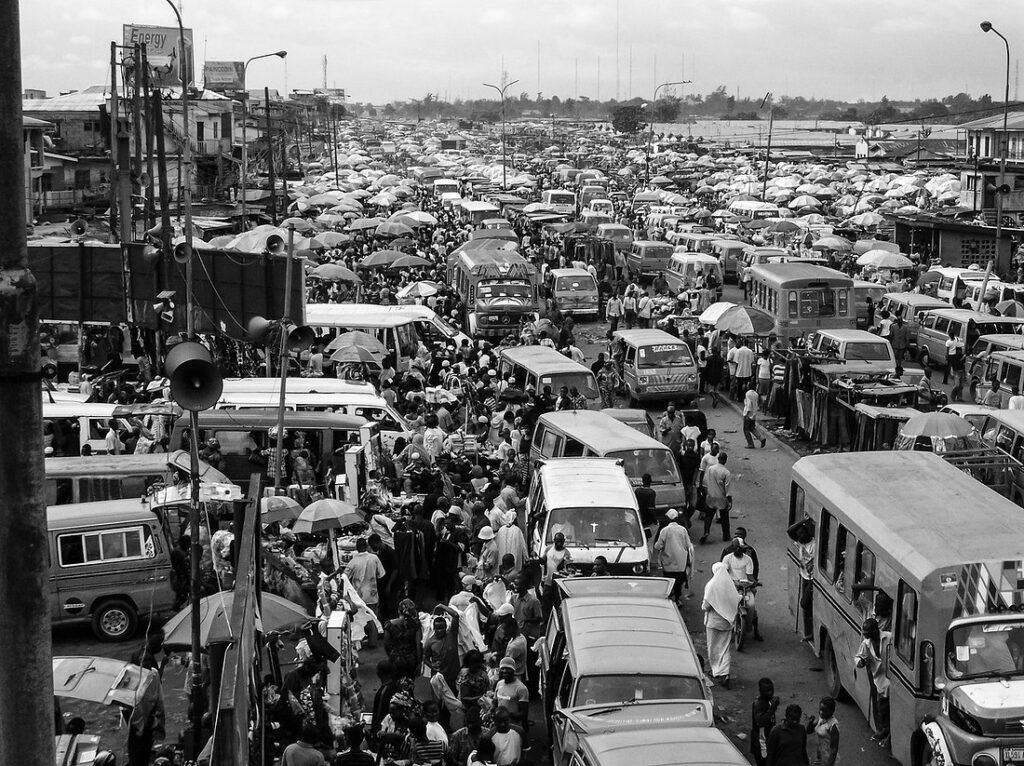
Overcrowding: Lagos’s population exploded, creating severe congestion and strain on infrastructure. The city simply couldn’t cope with the demands of being both a commercial hub and political capital.
Geographic Limitations: Lagos is located in the far southwest of Nigeria, making it geographically inconvenient for citizens from the north, east, and central regions. The lack of central positioning created a sense of distance between the government and large portions of the population.
Ethnic Tensions: Lagos is in Yoruba-dominated western Nigeria. Some ethnic groups felt the capital’s location gave undue advantage to one region, fueling concerns about fairness and national unity.
Security Concerns: The city’s coastal location and dense population raised security issues for government operations.
Infrastructure Collapse: Traffic congestion, housing shortages, inadequate water supply, and overwhelmed services made Lagos unsustainable as a modern capital.
It became clear that Nigeria needed a fresh start.
The Search for a New Capital (1975-1976)
In August 1975, General Murtala Muhammed’s military government convened a panel of experts to study whether Lagos should remain Nigeria’s capital. The answer was a resounding no.
The panel was tasked with finding alternatives and established strict criteria for the new capital:
Central Location: The capital must be in Nigeria’s geographical center to provide equal access for all citizens.
Neutral Territory: No major ethnic group should be able to claim the area as their ancestral homeland.
Good Climate: The location should have favorable weather conditions for year-round government operations.
Room for Expansion: Adequate land must be available for growth over the next century.
Strategic Security: The site should offer natural defensive advantages and be away from international borders.
Availability of Land: Minimal displacement of existing populations and ease of land acquisition.
Why Abuja Won
The site that would become Abuja checked every box:
Dead Center: Located almost exactly in the middle of Nigeria, providing geographical equity for all regions.
Neutral Ground: While indigenous Gbagyi, Gwandara, and other communities lived in the area, no major Nigerian ethnic group (Hausa, Yoruba, Igbo) could claim it as their territory. This neutrality was crucial for national unity.
Excellent Climate: Situated on a high plateau, the area enjoys moderate temperatures and reliable rainfall, unlike the extreme heat of the far north or humidity of the coastal south.
Low Population Density: Unlike Lagos, the area was sparsely populated, making land acquisition feasible without massive displacement.
Natural Landmarks: The dramatic Aso Rock and nearby Zuma Rock provided iconic natural features that could become symbols of the new capital.
Available Land: Abundant space allowed for proper planning and future expansion.
On February 3, 1976, General Murtala Muhammed’s government promulgated Decree No. 6 of 1976, officially creating the Federal Capital Territory and designating Abuja as Nigeria’s new capital.
Planning the Dream: The Master Plan (1976-1979)
With the location selected, Nigeria needed a plan. The government established the Federal Capital Development Authority (FCDA) in 1976 to oversee the project.
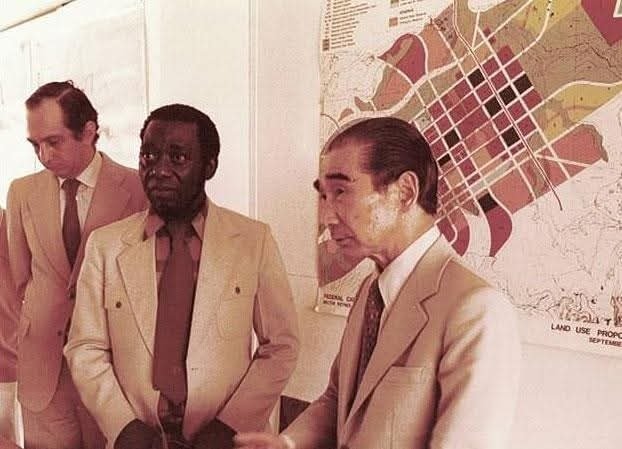
The task of designing Nigeria’s capital went to Kenzo Tange, a world-renowned Japanese architect who had designed cities and major structures across the globe. Working with his firm, Kenzo Tange and Urtec, and International Planning Associates (IPA), Tange created a master plan that would guide Abuja’s development.
The Master Plan’s Key Features:
Phased Development: The city would be built in phases, starting with the Central Area (government core) and expanding outward in organized stages.
Zoning: Clear separation between government, commercial, residential, and green zones to prevent the chaos that plagued Lagos.
Three Arms Zone: A dedicated area for the Presidency (Aso Rock Presidential Villa), National Assembly, and Supreme Court, physically representing the separation of powers.
Central Business District: A commercial hub designed to attract business and finance.
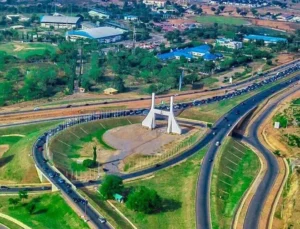
Wide Boulevards: Broad roads designed for efficiency and future traffic volumes, learning from Lagos’s mistakes.
Green Spaces: Parks, gardens, and preserved natural areas integrated throughout the city.
Satellite Towns: Planned communities on the outskirts to accommodate population growth: Gwagwalada, Kuje, Bwari, Abaji, and Kwali.
The master plan was completed in 1979, setting the stage for one of the 20th century’s most ambitious urban projects.
Building the Capital (1980s)
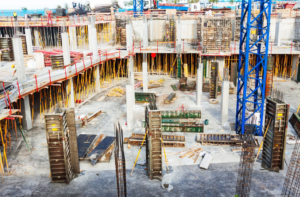
With plans finalized, construction began in earnest in the early 1980s. What followed was a decade of intense development that transformed empty savannah into a modern city.
Early 1980s: Infrastructure work begins. Roads, water systems, electricity grids, and sewage systems are laid. Earth-moving equipment reshapes the landscape.
1982: Construction of the first major government buildings begins, including ministries and the National Assembly complex.
Mid-1980s: The Presidential Villa (Aso Rock Villa) construction commences, perched dramatically at the foot of Aso Rock. This becomes the most iconic building project.
1987: Some federal ministries begin relocating from Lagos to Abuja, testing the new infrastructure.
Late 1980s: Residential areas take shape. The first wave of civil servants and workers move into newly completed housing in districts like Garki, Wuse, and Maitama.
The construction effort was massive. Thousands of workers labored to build a capital from scratch. Challenges included:
- Moving building materials to a previously undeveloped area
- Training local workers in modern construction techniques
- Coordinating hundreds of simultaneous projects
- Maintaining the master plan’s vision amid pressure for quick results
The Historic Transition (December 12, 1991)
After years of planning and construction, the moment finally arrived. On December 12, 1991, under the leadership of General Ibrahim Babangida (Nigeria’s President from 1985 to 1993), Abuja officially replaced Lagos as Nigeria’s capital.
The date, 12/12/91, was chosen for its symbolic symmetry and ease of remembrance.
The transition involved:
- Official relocation of the seat of government
- Transfer of key federal ministries and agencies
- Movement of diplomatic missions and embassies
- Relocation of thousands of civil servants and their families
- Establishment of Abuja as the constitutional capital
While Lagos remained Nigeria’s commercial capital and most populous city, political power now resided in Abuja. The transition was gradual, with some government functions taking several more years to fully relocate.
Post-1991: Explosive Growth
Since becoming the capital, Abuja has experienced phenomenal growth that has exceeded even the master plan’s ambitious projections.
Population Explosion: From fewer than 776,298 people in the 2006 census to over 3 million today in the metro area. Between 2000 and 2010, Abuja grew at 139.7%, making it the fastest-growing city in the world during that period.
Continuous Expansion: The city has sprawled beyond its original boundaries. Satellite towns like Gwagwalada, Kuje, Lugbe, and Nyanya have become major population centers. New districts like Guzape, Katampe Extension, and Lokogoma continue to develop.
Infrastructure Challenges: Rapid growth has strained infrastructure. Traffic congestion, housing shortages, and pressure on utilities echo the very problems that made Lagos unsustainable.
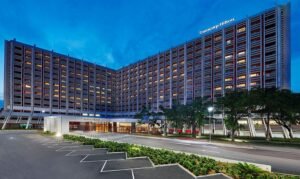
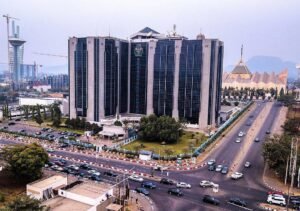
Economic Hub: Abuja has evolved beyond a government town into a major economic center. Banking, telecommunications, real estate, hospitality, and construction have boomed.
International City: Over 100 embassies and diplomatic missions now call Abuja home, cementing its status as Nigeria’s international face.
Ongoing Development: Major projects continue, including the Abuja Light Rail, new road networks, the Centenary City project, and constant expansion of residential and commercial areas.
The Name: A Historical Footnote
Even the name “Abuja” tells a story. Before becoming the capital, the area included a settlement named after Mallam Abubakar-Ja, an early resident known for his fair complexion. “Ja” means “red” in Hausa, and “Abubakar-Ja” meant “Abubakar the Fair-Skinned.”
Over time, “Abubakar-Ja” was shortened to “Abu-Ja” and finally “Abuja.” Interestingly, Mallam Abubakar’s brother, Suleman-Ja, gave his name to nearby Suleja, now just over 1 kilometer from Abuja’s border.
This naming reflects a common West African practice of identifying settlements by notable residents, preserving history in the very words we use today.
Legacy and Future
Abuja’s history is still being written. From its creation in 1976 to its designation in 1991 and explosive growth in the 21st century, the capital continues to evolve.
Challenges remain: managing growth sustainably, maintaining the master plan’s vision, ensuring infrastructure keeps pace with population, and living up to the promise of being a capital for all Nigerians.
Yet the dream that drove General Murtala Muhammed and the planners of the 1970s endures. Abuja stands as proof that vision, planning, and determination can transform landscapes and unite nations.
The journey from unknown villages to world capital took just four decades. The next chapter of Abuja’s history will be written by those who call it home today.
Explore More About Abuja:
To truly understand Abuja, dive deeper into the elements that make it Nigeria’s capital and one of Africa’s fastest-growing cities: